Walk Market Street past Heritage Hall on a Saturday in October and you will likely see a wedding. White columns, a garden gate propped open, someone in tulle crossing the lawn toward the Centennial Garden. It is the version of the building most people carry around: a pretty backdrop for someone else's afternoon, glimpsed from a car window on the way to somewhere else.
Come back three weeks later on a Wednesday evening and the parking pattern tells a different story. No white dress. No garden photographer. Just a line of cars belonging to people who live two, four, six blocks away, filing into the same white building for a meeting that has nothing to do with anyone's wedding.
That second version is the one worth knowing if you actually live in Norkirk. The building doing double duty on your street corner is not just a rental venue. It is the physical hinge for two different groups who claim Kirkland's history and Norkirk's present, and this fall, both of them are meeting in the same room, twenty-one days apart.
The Building Everyone Sees, Twice a Year, for the Wrong Reason
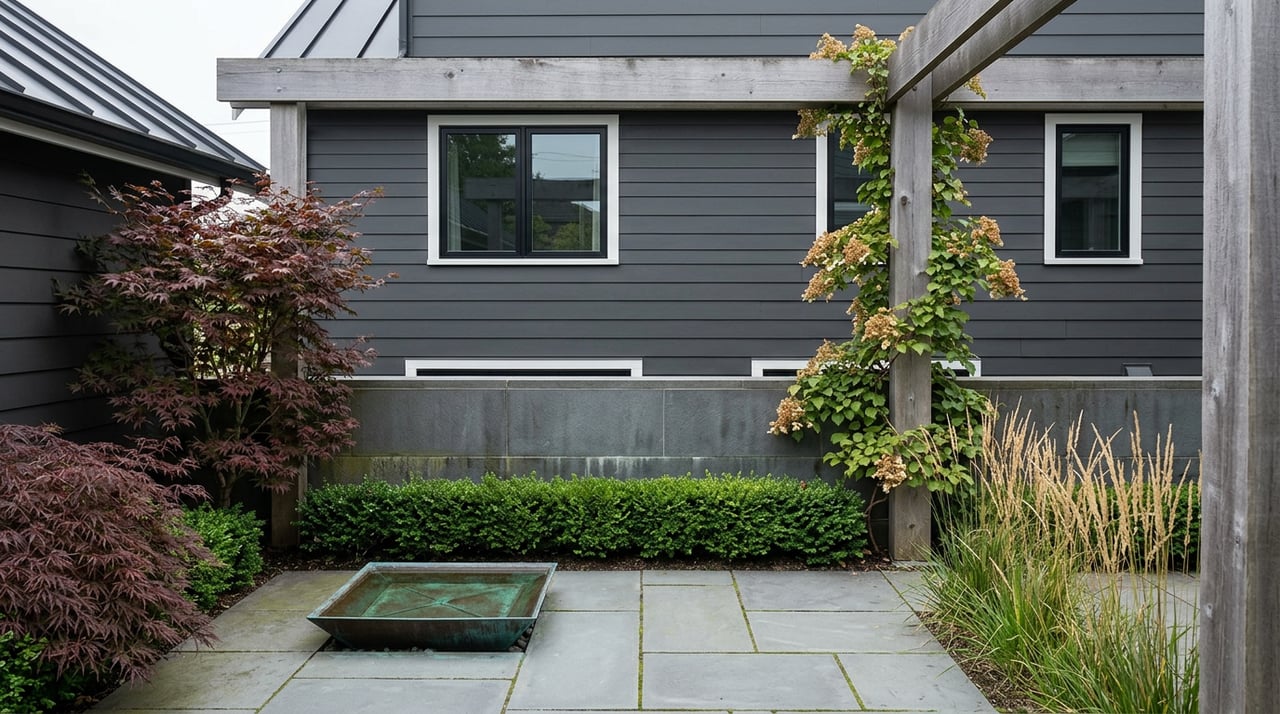
Heritage Hall went up in 1922 as the First Church of Christ, Scientist, built in the Greek Revival style with the columned front porch that makes it look, from certain angles, like it wandered north from a much older American town. The city now owns it. A restoration brought the white paint and the original fir floors back to something close to their first condition, and the building sits inside Heritage Park alongside the Centennial Garden, a stone-pathed plot dedicated by Kirkland Parks and Community Services and the Kirkland Rotary Garden Arbor.
Most of the city knows it as a wedding venue, and it is a good one. Fewer residents know that the lower level of that same building houses the Kirkland Heritage Society's Resource Center, or that the main hall is where the Norkirk Neighborhood Association gathers its own members twice every other month. The garden is real. So is the meeting schedule underneath it.
Three Weeks Apart, Same Room, Two Different Norkirks
The Kirkland Heritage Society runs its public programs on the last Wednesday of the month from February through May, then picks the season back up in September and October, seven to nine in the evening, with parking available at Heritage Park and wheelchair access at the rear entrances. Past sessions have ranged from a maritime historian's talk on the schooner Wawona, once moored on the Kirkland waterfront, to an evening built around antique kitchen tools where members brought in great-grandmother's gadgets for the room to identify and argue about. The Society itself grew out of the old Kirkland Historic Commission, formed in 1977 specifically because too many of the city's early buildings had already disappeared by the time anyone thought to write them down.
The Norkirk Neighborhood Association keeps a different schedule in the same room. It meets the first Wednesday of even months, seven o'clock, open to any Norkirk resident who emails [email protected] to get on the list. Past gatherings have doubled as informal community projects, from wrapping holiday gifts for Kirkland's Friends of Youth to working together on a neighborhood LEGO mosaic.
Line those two schedules up against an October calendar and something specific falls out. October is an even month, so the Association's meeting lands on the first Wednesday, October 7. The Heritage Society's last-Wednesday slot falls on October 28. Twenty-one days apart, same building, same hall, two audiences that rarely overlap: one made up of the people who live within walking distance and want to talk about a stop sign or a sidewalk repair, the other made up of anyone in Kirkland curious about the ferries, the foundry, or a shipwreck.
Neither meeting shows up on a festival calendar or a tourism site. Both are open to the public. That combination, unmarketed but unguarded, is rare enough to be worth noticing.
The Landmarks You Pass to Get There
Walking to either meeting from most of Norkirk's residential core means passing the historic cluster at Market Street and 7th Avenue, where the Peter Kirk Building holds a spot on both the National and State Registers of Historic Places. The Newberry House, the Kirkland Cannery, Sessions Funeral Home, the 5th Brick Building and the Houghton Church Bell all carry the city's Community Landmark designation, a cluster of names most residents walk past without ever learning.
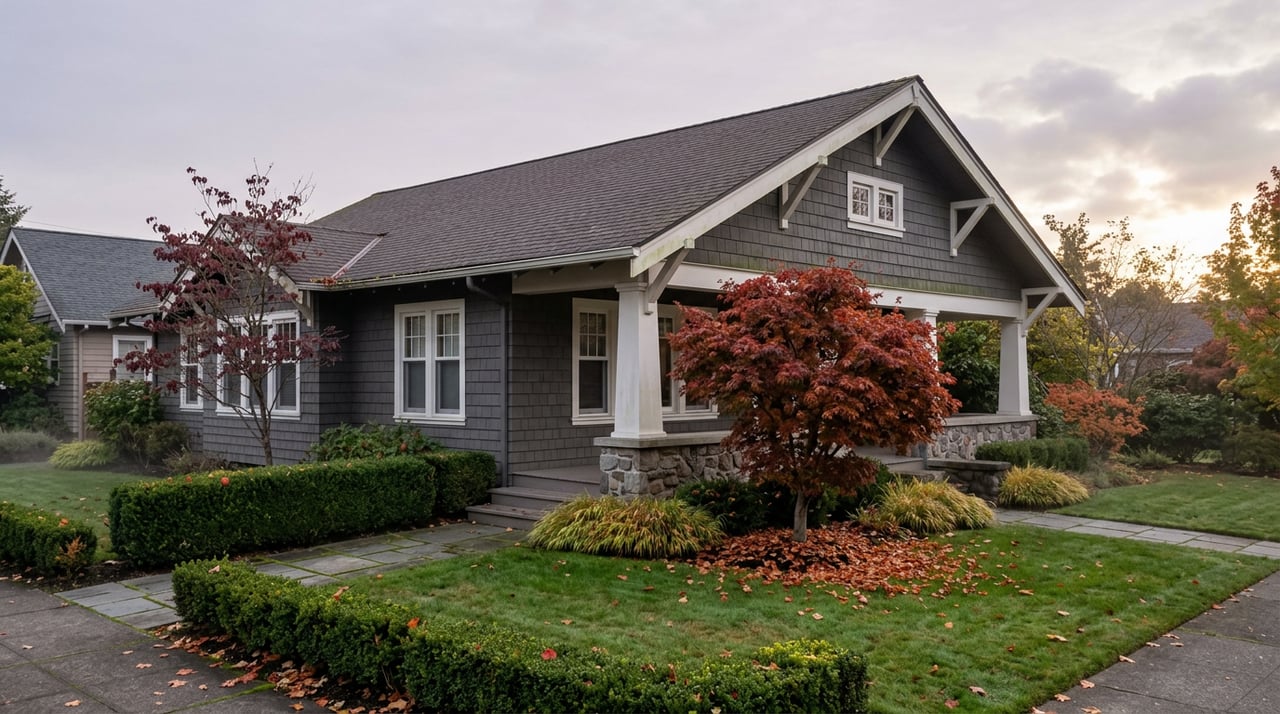
A block or two over sits the Trueblood House, once known as the Buchanan House, which operated as a medical office as far back as 1892 before the city moved the whole structure to 6th Avenue in 2017 to keep it standing. Norkirk itself holds the largest concentration of bungalows in Kirkland, a legacy of the Arts and Crafts building boom that followed the neighborhood's 1914 replat. In October, with the leaves changing over those front porches and over the stone pathway into Centennial Garden, the walk to a Wednesday meeting doubles as a walk through most of the neighborhood's architectural memory, whether or not anyone stops to look.
The Fall Everyone Else Hears About
None of this competes with the fall season that actually gets marketed. Kirkland Urban's Treat Street has claimed a Saturday evening in late October for each of the past two years, drawing families with a corn maze, costumed performers and a trick-or-treat candy wall built into a plywood door. It is free, it is loud, and it is the version of autumn most people picture when they think about Kirkland in October.
Heritage Hall's fall is the other version. No maze, no DJ, no press release. Just two standing meetings that happen to share a building, three weeks apart, run by people who are not trying to draw a crowd from outside the neighborhood. If you have lived in Norkirk for years and never sat in on either one, you have been skipping the fall season that was actually built to your address rather than the city's.
How to Actually Show Up
Both meetings are easier to attend than their obscurity suggests. The Kirkland Heritage Society's October program is open to the public with no membership required, parking available at Heritage Park, and the lower-level Resource Center accessible for anyone who wants to see the photo archive between sessions. The Norkirk Neighborhood Association's October 7 meeting only requires an email to get on the invite list, and you only need to live in Norkirk to join.
Neither event will change how your street looks or what your home is worth. What they offer is smaller and, for anyone who plans to stay a while, more durable: a working sense of the neighborhood you already chose, built one Wednesday at a time in a building most people only ever see through a car window.
If you are thinking further down the road about what a home in Norkirk is worth, or what buying here actually involves once you look past the walkability and the bungalows, Marianne Francis works this neighborhood in more than one sense. Reach out when you are ready to talk specifics.