If you have ever scrolled through Norkirk listings and wondered why one block shows early cottages, another has a mid-century ranch, and the next features a newer contemporary rebuild, you are not imagining things. Norkirk has a layered housing story, and understanding that mix can help you read listings more clearly, compare homes more intelligently, and spot what gives this Kirkland neighborhood its lasting appeal. If you are buying or preparing to sell in Norkirk, here is what to know about how old and new homes fit together here. Let’s dive in.
Why Norkirk Feels Layered
Norkirk is one of Kirkland’s most historic neighborhoods, and the city notes that it contains some of Kirkland’s oldest homes while also seeing more recent infill and modern-style redevelopment. The neighborhood is generally bounded by the Cross Kirkland Corridor to the east, Market Street to the west, downtown and Moss Bay to the south, and the Juanita Slope near 20th Avenue to the north, according to the City of Kirkland’s neighborhood plan.
That mix of eras is not random. Much of the original 1890 plat still shapes the street pattern, especially between Market Street and 3rd Street and south of 10th Avenue, while areas north of 10th and east of 3rd were replatted in 1914 to better fit the land. As a result, smaller lots, alleys, and irregular parcel lines still influence what can be built and how homes sit on the block.
How The Street Grid Shapes Homes
One of the best ways to understand Norkirk is to look past the house itself and notice the block pattern around it. The city emphasizes preserving the neighborhood’s street-and-alley grid because it supports pedestrian movement, ADU access, and fewer curb cuts, all of which help maintain the rhythm of established streets.
That matters when you are comparing older homes and newer construction. Even a newly built home may sit on a much older lot pattern, which means the placement, setbacks, garage access, and front-facing presence often reflect a historic framework rather than a blank-slate development site.
The neighborhood plan also points to design details that shape the experience of a block, including porches, landscaping, garage treatment, setbacks, and alley access. In other words, Norkirk’s character comes from both architecture and layout, which is why the neighborhood can absorb newer homes without losing its visual identity.
The Three Main Housing Layers
Early Cottages And Bungalows
The oldest and most recognizable layer in Norkirk is its early-20th-century housing stock. The city says Norkirk has the greatest number of bungalows in Kirkland, and many residents value the neighborhood’s older cottages and houses for their historic character.
Norkirk’s preservation significance is substantial. A 1999 historic inventory cited in the city plan found that the neighborhood contained one-third of Kirkland’s inventoried historic buildings and 20 percent of its highest-priority structures. That helps explain why older homes still play such a strong role in the neighborhood’s identity today.
You may also see a wider range of housing forms than expected in an older neighborhood. The city notes that Norkirk integrates cottages, duplexes, triplexes, and ADUs, which adds to the layered feel of the area.
Mid-Century Homes
A second major wave of homebuilding arrived during and after World War II. According to the King County survey of Kirkland residences built between 1945 and 1965, Norkirk added 333 homes across the four five-year periods from 1945 through 1965.
That survey also notes that older Kirkland neighborhoods such as Market and Norkirk developed through owner-purchased lots and custom builders, rather than a single uniform subdivision plan. For you as a buyer or seller, that means the mid-century inventory often feels varied, with less repetition from house to house.
Architecturally, this era includes ranch houses, contemporary ranches, two-story homes, split-entry homes, and a smaller number of modernist designs. You may find simple lines, shallow roof pitches, picture windows, attached garages, and practical layouts that reflect the period.
Newer Infill And Rebuilds
The newest layer includes infill development, full rebuilds, ADUs, and other forms of compatible housing. The city’s current neighborhood plan says Norkirk has recently experienced more demolition of older homes for modern-style infill, which is part of why the neighborhood can feel so architecturally diverse.
At the same time, the plan supports housing types such as cottages, common-wall duplexes and triplexes, clustered dwellings, ADUs, and small-lot single-family homes when they fit neighborhood scale. The city also identifies a small-lot area bounded by 2nd Street, the alley between Market and 1st Streets, 8th Avenue, and the alley between 12th and 13th Avenues.
For buyers, this means a newer home in Norkirk is often part of a larger story about how the neighborhood evolves within an older framework. For sellers, it means presentation and positioning matter, because not all “new” homes are understood the same way by the market.
How To Read A Norkirk Listing
When you look at a Norkirk listing, age is only one part of the picture. The lot pattern, access, additions, and architectural clues often tell you just as much as the year built.
Clues An Older Home May Show
A listing may point to an early cottage or bungalow if you notice:
- Smaller overall square footage
- A front porch as a defining feature
- Mature landscaping or larger established trees
- Detached garage placement
- Alley access
- Irregular or asymmetrical lot lines
- Language about original charm or historic character
These clues align with the neighborhood’s early platting and long-documented historic fabric in the city plan.
Clues A Mid-Century Home May Show
Mid-century homes are often easier to identify once you know what to watch for. The King County survey describes typical forms such as low, horizontal ranch houses with attached garages and picture windows, along with contemporary ranches that may feature flat or shed roofs and larger glass areas.
If listing photos show a long, low profile, a shallow roof pitch, or a garage wing that feels integrated but slightly different from the original footprint, the home may be a mid-century original with later updates or expansion.
Clues A Newer Build May Show
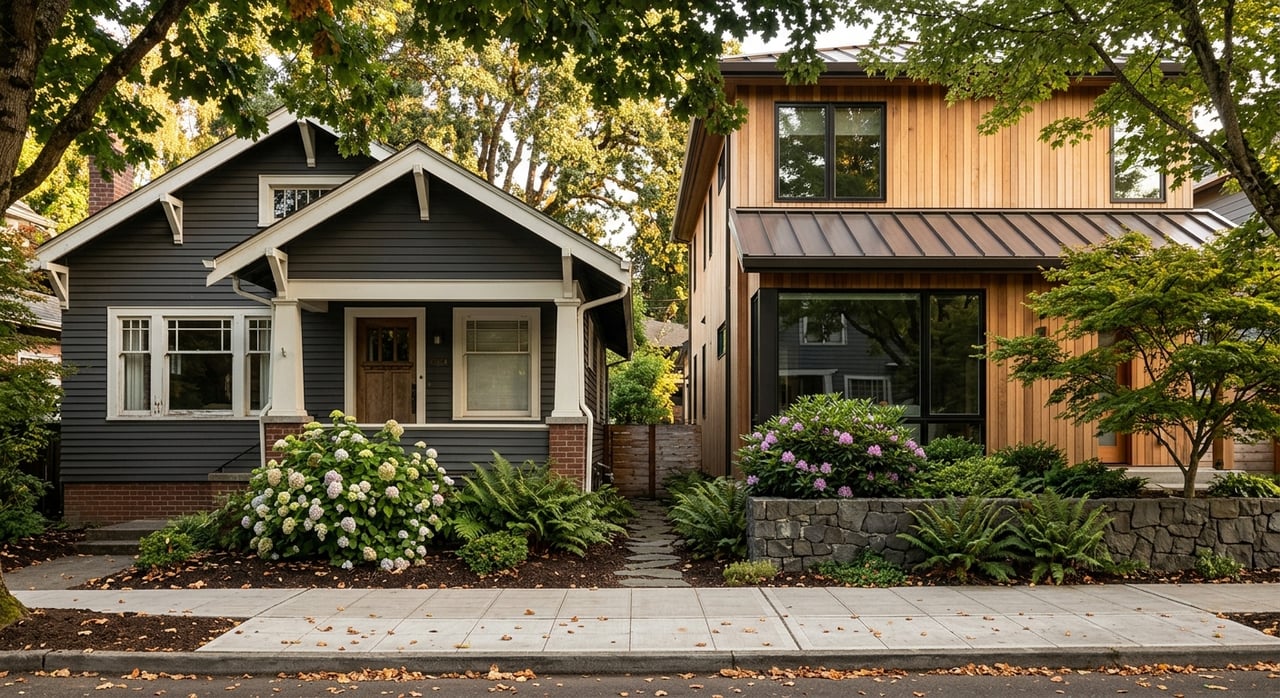
A contemporary home does not always mean a contemporary streetscape. In Norkirk, newer homes often still follow older lot patterns, porch-to-street relationships, and setback rhythms because the city’s guidance calls for new development to enhance historic residential elements while preserving light, air, privacy, and neighborhood scale.
So if a home looks new but still feels visually aligned with the block, that is often by design. The architecture may be current, but the site planning may still be responding to the neighborhood’s older bones.
What This Means For Buyers
If you are shopping in Norkirk, it helps to compare homes by more than finish level alone. Two similarly priced homes may offer very different ownership experiences depending on whether they are early-century houses, postwar homes, or recent rebuilds.
Older homes may offer charm, established landscaping, and architectural detail, but maintenance history becomes especially important. Mid-century homes may provide practical layouts and solid street presence, yet updates such as energy improvements, seismic work, and the quality of additions can affect long-term usability and cost.
Newer homes may reduce near-term maintenance and align with modern living preferences, but they should still be evaluated in the context of lot placement, privacy, design fit, and how they compare to nearby homes. In a neighborhood as layered as Norkirk, context matters.
What This Means For Sellers
If you own a home in Norkirk, your home’s value story often depends on where it sits within the neighborhood’s three housing layers. A preserved bungalow, a thoughtfully updated mid-century home, and a design-forward rebuild can all attract interest, but each appeals for different reasons.
That is why careful positioning matters. Buyers do not just respond to square footage or finish materials here. They respond to how a home relates to the block, how it honors the lot and streetscape, and whether its updates feel considered rather than generic.
In a neighborhood known for both history and evolution, strong presentation can clarify your home’s place in the market. That is especially true when the goal is to show not just what the home is, but why it belongs in Norkirk.
Maintenance And Long-Term Value
Because Norkirk includes homes from several eras, upkeep can vary widely from one property to the next. Based on the neighborhood’s age mix and redevelopment pattern described in the city plan, older homes may be more likely to need attention to roofs, windows, insulation, drainage, or additions completed in later decades.
Mid-century homes often raise a different set of questions, including energy efficiency, structural updates, and how original spaces connect to renovated areas. In either case, the style label alone does not tell the full story. The home’s condition, quality of updates, and relationship to the site matter just as much.
The neighborhood’s long-term appeal is supported by several durable factors noted in the city plan, including its historic identity, proximity to downtown Kirkland, access to the Cross Kirkland Corridor, public parks, school facilities, preserved view corridors, and policies that encourage compatible infill while respecting block scale. Those fundamentals help explain why Norkirk continues to attract attention from buyers looking for both character and location.
If you are trying to make sense of Norkirk’s mix of old and new homes, a more nuanced reading of the neighborhood can give you an edge. Whether you are evaluating a listing, preparing your home for sale, or looking for the right fit on the Eastside, thoughtful local guidance can make the process far more strategic. If you would like a tailored perspective on Norkirk or the broader Kirkland market, connect with Marianne Francis.
FAQs
What types of homes are most common in Norkirk?
- Norkirk includes a mix of early cottages and bungalows, mid-century homes built largely between 1945 and 1965, and newer infill or rebuilt homes.
Why do Norkirk streets feel different from newer neighborhoods?
- Much of Norkirk still follows its original 1890 plat and a 1914 replat in some sections, which created smaller lots, alleys, and irregular parcel shapes that still influence how homes sit on the land.
How can you tell if a Norkirk home is older from a listing?
- Common clues include smaller footprints, front porches, mature landscaping, detached garages, alley access, and references to original charm or historic character.
What defines a mid-century home in Norkirk?
- Mid-century homes in Norkirk often include ranches, contemporary ranches, split-entry homes, and other postwar designs with low profiles, picture windows, attached garages, and practical layouts.
Are newer homes in Norkirk built differently from homes in large new subdivisions?
- Often, yes. Many newer Norkirk homes are built within an older street grid and lot pattern, so they may follow established setbacks, alley access patterns, and neighborhood scale even when the architecture is contemporary.
Why does Norkirk have lasting appeal for buyers and sellers?
- Its appeal is tied to historic identity, proximity to downtown Kirkland, access to the Cross Kirkland Corridor, parks and public facilities, and city policies that support compatible growth while preserving neighborhood character.