If you are preparing to sell a waterfront home in West of Market, you are not simply listing square footage on Lake Washington. You are presenting a rare property in one of Kirkland’s most visually and environmentally sensitive settings, where views, shoreline condition, permits, and presentation all shape buyer response. With the right plan, you can move from uncertainty to a launch that feels orderly, elevated, and credible. Let’s dive in.
Why West of Market Requires Extra Care
West of Market sits within Kirkland’s historic Market neighborhood, bordered by Market Street to the east and Lake Washington to the south and west. The area is known for a mix of older and newer homes, public water access, parks, and broad lake, city, and mountain views. For buyers, that setting creates emotional appeal before they ever step inside.
It also means your property is part of a shoreline environment with real constraints. Kirkland’s neighborhood planning documents identify steep slopes, erosion hazards, and direct drainage to Lake Washington in this area. In practical terms, that means buyers are often noticing not just your architecture and interiors, but also how the site has been cared for.
That is especially true in a neighborhood where shoreline lifestyle is visible in everyday landmarks like Kiwanis Park, Lake Avenue West Street End Park, and nearby Waverly Beach Park. Buyers are evaluating the full experience of being near the water. They are often asking whether the home feels effortless, stable, and intentional from the street to the shoreline.
Start With Shoreline Due Diligence
Before you think about staging, photography, or pricing, start with a simple question: what on the property may fall under shoreline review? Kirkland’s Shoreline Master Program applies within 200 feet of Lake Washington’s ordinary high water mark and governs development and alterations in that area. That makes pre-listing review a foundational step, not an afterthought.
If you have a dock, bulkhead, shoreline stairs, bank work, drainage concerns, or prior exterior modifications near the water, treat them as items to review early. Kirkland notes that even exempt shoreline work requires an exemption application, while non-exempt work requires city review and permitting. Certain proposals may also involve additional review.
This is where intention matters. A seller who identifies issues early can make better decisions about what to repair, what to document, and what to leave untouched until the right approvals are in place. A rushed approach can create avoidable delays just when you want momentum.
What to Review Before Listing
A waterfront pre-listing review should focus on the parts of the property that affect confidence, usability, and compliance. In West of Market, that often includes:
- Shoreline structures such as docks, piers, and bulkheads
- Drainage patterns and irrigation near slopes
- Signs of erosion, slope movement, or water runoff
- Tree conditions and any planned tree work
- Prior repairs or alterations near the shoreline
- Landscaping changes that may affect sightlines or shoreline function
Kirkland also notes that exemptions do not apply in the same way across critical areas such as shorelines, steep slopes, wetlands, and flood hazard areas. That is why a basic exterior checklist is not enough for a West of Market waterfront property.
Treat the Site Like Part of the Story
In this part of Kirkland, presentation is not just cosmetic. The site itself helps tell buyers whether the home has been thoughtfully stewarded over time. A polished launch should make the shoreline feel calm, legible, and well managed.
That may mean addressing visible drainage issues, refreshing worn pathways, simplifying overgrown planting, or reviewing tree health before photography. The goal is not to overdesign the landscape. The goal is to remove friction, preserve sightlines, and make the property easier for buyers to understand.
Kirkland’s planning guidance for the Market neighborhood specifically emphasizes preserving public view corridors to Lake Washington, Seattle, and the Olympic Mountains. For a seller, that is a useful design lens. Landscape work should frame views, not compete with them.
Native Planting Can Support a Better Presentation
If you are refreshing the landscape, shoreline-appropriate planting deserves consideration. Kirkland publishes native plant guidance for trees, shrubs, and groundcovers that support shoreline ecology, and King County also provides Northwest native plant guidance. These resources matter because shoreline policies in Kirkland emphasize ecological function as well as appearance.
For your listing, native or shoreline-appropriate planting can do two things at once. It can help the property feel more settled and place-specific, and it can reduce the look of high-maintenance or visually cluttered landscaping. In a waterfront setting, restraint usually reads better than excess.
Repairs Need a Waterfront Timeline
Not every exterior improvement belongs in a pre-sale plan. On a West of Market waterfront property, some repairs are straightforward and some may involve shoreline review, critical area issues, or longer lead times. That is why triage comes before spending.
Kirkland’s shoreline guidance distinguishes between different levels of repair and different types of shoreline work. The city also notes a preference for soft or more natural shoreline stabilization when possible, rather than defaulting to hard stabilization solutions. If you are considering work on a bulkhead, pier, bank, or shoreline edge, that is a regulated project, not a quick cosmetic refresh.
For many sellers, the smartest move is selective preparation. Focus first on repairs that improve confidence and visual clarity without creating permit risk or timeline strain. Then build the launch calendar around what can actually be completed well.
Staging Should Clarify, Not Decorate
In a premium waterfront sale, staging works best when it explains the home. Buyers need to understand scale, flow, room purpose, and how daily life connects to the shoreline, terraces, and view corridors. A thoughtful staging plan does not simply fill space. It reveals how the property lives.
That distinction matters because staging has measurable influence on buyer response. In the National Association of Realtors’ 2025 staging report, 29% of agents said staging increased the dollar value offered by 1% to 10%, and 49% said staging reduced time on market. For a high-consideration home, that supports a more intentional staging strategy.
In practice, the best staging for West of Market is often restrained and architectural. It should direct the eye toward the windows, the orientation of the home, and the relationship between interior rooms and the water. When staging is too busy, it competes with the setting.
Your Media Package Is the First Showing
For waterfront homes, digital presentation is not a finishing touch. It is the first showing. According to NAR’s 2025 buyer and seller data, all home buyers used the internet in their home search, and some of the homes they considered were viewed online only.
That has direct implications for how you launch. If the first encounter is digital, then photography, video, and sequencing need to do more than document the property. They need to convey atmosphere, orientation, and value in seconds.
A West of Market waterfront home often benefits from a media plan that includes:
- High-format photography with a clean editorial feel
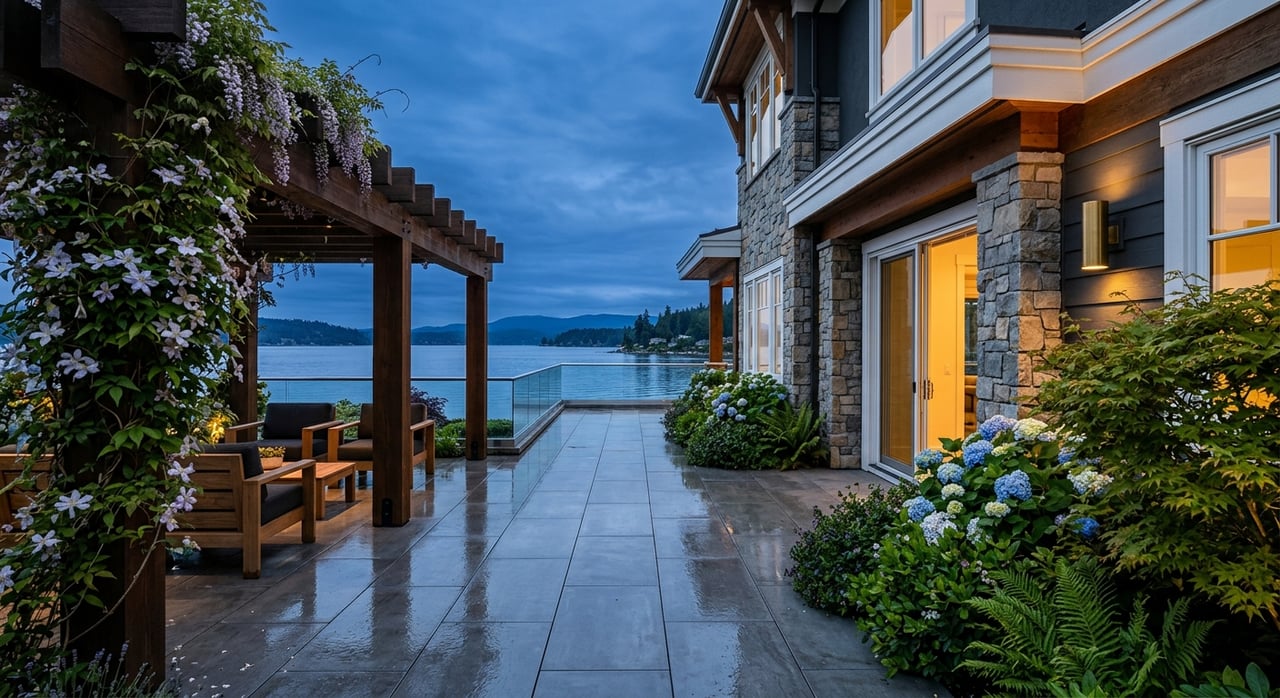
- Twilight images that capture shoreline mood and reflected light
- Aerial imagery where appropriate
- Framing that shows both architecture and site relationship
- A narrative sequence that moves from approach to living spaces to waterfront connection
For a premium home, this is where curated marketing earns its keep. The visuals should feel composed, calm, and truthful to the experience of the property.
Sequence Matters More Than Sellers Expect
One of the biggest mistakes in a waterfront sale is launching too early. If photos are taken before repairs are complete, if landscaping is unresolved, or if shoreline questions remain unanswered, the listing can feel incomplete to sophisticated buyers. Once that first impression is out in the market, it is difficult to recover.
A stronger sequence is far more disciplined:
- Confirm shoreline, permit, and site issues first
- Complete visible repairs and drainage or landscape work second
- Stage the home third
- Photograph and film the property fourth
- Launch only when the full package is ready
This order aligns with Kirkland’s shoreline framework, which can regulate grading, filling, planting, stabilization, trail work, and other site changes within shoreline jurisdiction. It also reflects the reality of premium marketing: preparation creates leverage.
A Premium Rollout vs. a Basic Rollout
In King County, premium pricing does not mean a property sells itself. NWMLS reported that King County remained the highest-priced county in the region for single-family homes in 2025, while statewide completed sales averaged 99.6% of list price. Buyers are active, but they still respond to precision.
That is why there is a real difference between a basic rollout and a premium one.
| Approach | What it looks like |
|---|---|
| Basic rollout | Cosmetic tidy-up, standard photos, and reactive timing |
| Premium rollout | Shoreline-aware planning, selective repairs, appropriate landscaping, bespoke staging, editorial media, and a coordinated launch calendar |
For a West of Market waterfront property, that difference is visible. It shows up in how quickly buyers understand the asset, how confidently they evaluate the site, and how seriously they engage when the home comes to market.
Selling With Intention Means Selling With Stewardship
The strongest waterfront sales often feel effortless to the buyer. Behind that ease is careful work: permit awareness, site review, selective investment, disciplined timing, and presentation that honors the architecture and landscape. In West of Market, that level of preparation is not excessive. It is appropriate to the setting.
If you want your sale to reflect the quality of the home itself, intention should guide every step. The right strategy is not about doing more for the sake of it. It is about doing the right things in the right order, so buyers can see the property clearly and respond with confidence.
When you are ready to plan a thoughtful waterfront sale in West of Market, Marianne Francis offers full-service listing representation grounded in curated presentation, local Kirkland expertise, and careful transaction stewardship.
FAQs
Do I need a shoreline permit to sell my West of Market waterfront home?
- Not necessarily to sell the home itself, but any recent or planned work within shoreline jurisdiction may require an exemption application, permit review, or both under Kirkland’s shoreline rules.
What parts of a West of Market property should I review before listing?
- Focus on shoreline structures, drainage, slope conditions, erosion concerns, tree issues, and any prior exterior work near the water that could affect buyer confidence or city review.
Can I update the landscaping on a Kirkland waterfront property before listing?
- Often yes, but it is wise to keep the work shoreline-appropriate, protect sightlines, and consider native planting guidance published by Kirkland and King County.
Is staging worth it for a West of Market waterfront home sale?
- Research cited in the report suggests staging can reduce time on market and may improve the dollar value offered, especially when it helps buyers understand scale, flow, and view orientation.
Why does photography matter so much for a Kirkland waterfront listing?
- Because buyers begin online, and a waterfront home needs imagery that communicates architecture, light, setting, and shoreline connection from the first impression.
What is the best order for preparing a West of Market waterfront home for market?
- Start with shoreline and permit review, then complete repairs and landscape work, then stage, then photograph and film, and only then launch the listing.