Open a portal, filter for Norkirk, and the sticker shock arrives before the photos load. The neighborhood's median sale price sat near $2.3 million in early 2026, while Kirkland as a whole cleared roughly $1.5 million in the July 2026 monthly reporting cycle. A buyer running comps at the kitchen table sees a 50 percent premium and reaches for a familiar explanation: better homes.
That explanation is wrong. And the way it's wrong shows up first as a research trap that distorts a Norkirk buyer's comp pool before an offer is ever drafted.
The comp pool starts lying to you at the listing description
Norkirk is a real place with real boundaries: north of Kirkland Avenue, west of I-405, east of Market Street, running up toward Forbes Creek. It is not the same as "East of Market," a marketing label agents use liberally on listings that sit anywhere from the far edge of Norkirk to the Highlands. Portals treat both terms as searchable neighborhoods, and the resulting search results blend two different tiers of housing stock into one visual grid.
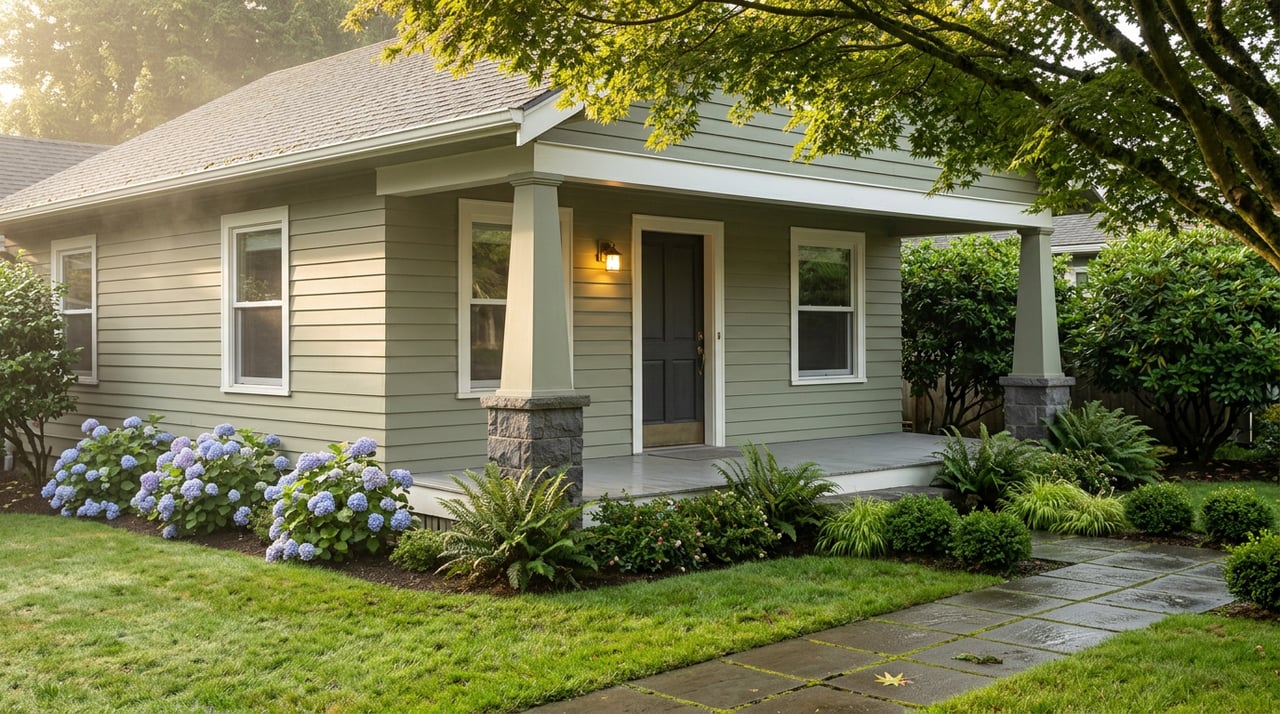
The effect is subtle and expensive. A buyer pricing a compact 1920s bungalow on a 6,000 square foot Norkirk lot pulls up a screen that also contains new construction near the Highlands running past $2.5 million, plus infill townhomes from Prestigious Builds, Lang Homes, and Enfort Homes marketed under the same "East of Market" umbrella. The blended average pushes the buyer's mental anchor upward, and it hides what a Norkirk lot alone is actually worth.
The first move in any Norkirk offer is refusing that blend. Pull comps by parcel, not by portal tag.
The number that tells the real story
Here is the piece of market data that reframes everything:
Across Kirkland in mid-2026, the median sale price ticked modestly higher year over year, while price per square foot fell in the range of 9 to 10 percent depending on the data source.
Read that twice. Buyers are paying more per home and less per foot. The only way both can be true is if the value is migrating out of the structure and into the land underneath it. That migration is most visible in neighborhoods where the housing stock cannot explain the price. Norkirk is the cleanest example on the Eastside.
| Metric | Kirkland citywide (July 2026) | Norkirk (Feb–Mar 2026) |
|---|---|---|
| Median sale price | ~$1,499,000 | ~$2.2M–$2.3M |
| Median days on market | 22 | 24–34 |
| Sale-to-list ratio | 97.8% | Below 98%, room to negotiate |
| Dominant housing era | 1960s–early 2000s | 1910–1930 bungalows and Craftsman |
A Norkirk buyer paying the neighborhood's median is roughly $700,000 above the Kirkland-wide median. That premium is not buying more finished space. In many cases it is buying less. What it is buying is a specific lot in a specific five-block radius, and the house on it is closer to a rounding item than a driver.
What the lot is actually doing
Once the underwriting shifts from structure to land, the premium starts to make sense. A Norkirk lot delivers a stack of location features that a comparable inland Kirkland parcel simply cannot replicate:
- Walkable enrollment to Peter Kirk Elementary and Kirkland Middle School, both within a few blocks of most Norkirk homes
- Direct on-foot access to downtown Kirkland's dining and retail spine along Market Street, including the neighborhood's own anchor at DERU Market
- Immediate connection to the Cross Kirkland Corridor, the 5.75-mile rail-trail that functions as the city's non-motorized commuter spine
- Rebuild and DADU optionality on the older lot configurations, which is why builders like Enfort's Knox model pair a main house with a detached cottage on a single Norkirk-adjacent parcel
- Smaller neighborhood parks including Van Aalst Park, Reservoir Park, and Tot Lot Park distributed inside the walking radius
None of these attributes appear on an appraisal grid the way granite counters or a new roof do. They show up in the residual land value, and that residual is what the Norkirk premium is capitalizing. Some of the most recognized homes in the neighborhood came from architect Paul Hayden Kirk during the 1910 to 1930 development window, and even those trade on the strength of the parcel rather than the square footage.
The friction the premium hides
Underwriting the land instead of the house is not the same as ignoring the house. It becomes an inspection question, and Norkirk's inspection questions are specific.
The neighborhood's early-20th-century stock carries the maintenance history of a hundred years of Puget Sound weather. Homes within a mile of Lake Washington, and Norkirk qualifies, accumulate moisture intrusion in decks, covered patios, and lower-level entries. Local sellers who have sat through these transactions have seen deck and structural remediation quotes land in the $40,000 to $60,000 range during inspection negotiation. A buyer who has anchored on the land value can absorb that number as part of a planned remodel. A buyer who assumed they were paying a premium for a fully finished home cannot, and the deal breaks or repairs.
The seller-side version of the same problem is the disclosure narrative on the Form 17. If the mechanicals were updated in 2004 and the deck was refinished in 2018, that is not the same as replacement, and buyer's inspectors in this market are trained to spot the difference. Pricing off the Norkirk median without a candid read of the structure's remaining useful life invites a mid-transaction renegotiation that a well-priced listing avoids entirely.
Pricing against the right pool
The corrective for both buyer and seller is the same. Build a comp set that respects the mechanism.
For a buyer, that means filtering out the "East of Market" catch-all and rebuilding the pool from parcel-level records, matching on lot size, era of construction, and school walk radius. A 1925 bungalow on a 6,200 square foot lot two blocks from Peter Kirk Elementary is comping against other pre-1935 homes on similar lots inside that walk, not against a 2023 new build closer to 405. When the comp set is tightened this way, the Norkirk premium usually turns out to be smaller than the portal blend suggests, and the negotiation opens up.
For a seller, the same discipline works in reverse. The Norkirk premium is real, and it is defensible when the listing narrative explicitly prices the lot, the walk radius, and the rebuild optionality alongside the home. It becomes unstable when the presentation implies the buyer is paying $2.3 million for the house itself. Sellers who acknowledge the mechanism in their marketing typically hold closer to list. Sellers who don't tend to see the days-on-market number drift, which is why Norkirk's median DOM has run higher than Kirkland's citywide figure through the first half of 2026.
What this means for the offer
The practical translation is short. Norkirk trades above Kirkland's median because a Norkirk lot is worth more than a Kirkland lot, and the house on top is doing less of the work than the price suggests. Buyers who understand that write offers that account for near-term structural spend without walking away from the location. Sellers who understand it price and market the parcel rather than the finishes. The transactions that struggle in this neighborhood are almost always the ones where one side of the table has misidentified what is being sold.
FAQ
Is Norkirk the same as East of Market?
No. Norkirk is a City of Kirkland neighborhood with defined boundaries. "East of Market" is a marketing phrase that covers a broader and looser area, and it frequently appears in listings that are not inside Norkirk. Verifying the parcel's neighborhood at the city level, rather than relying on listing copy, is the cleanest way to avoid comp confusion.
Why is Norkirk's median days on market higher than Kirkland's overall figure?
Two forces are at work. The premium price point narrows the buyer pool, and the age of the housing stock invites more inspection scrutiny. Both extend the average marketing timeline compared with newer inland Kirkland inventory that transacts closer to the citywide 22-day median reported in July 2026.
Does the falling price per square foot mean Norkirk values are dropping?
Not in the way the phrase suggests. Total median prices have held or risen modestly, while per-foot figures have softened citywide. That pattern is consistent with buyers paying for land and location and treating built square footage as a secondary factor. In a neighborhood where the land case is strongest, values have proven durable even as per-foot numbers compress.
If you are evaluating a Norkirk purchase or preparing a Norkirk home for market, the mechanism matters more than the median. Marianne Francis advises buyers and sellers across Kirkland's premium neighborhoods with a parcel-level read on value and negotiation strategy grounded in what the market is actually pricing. Work With Marianne to plan the next move.